


 Mr. Xue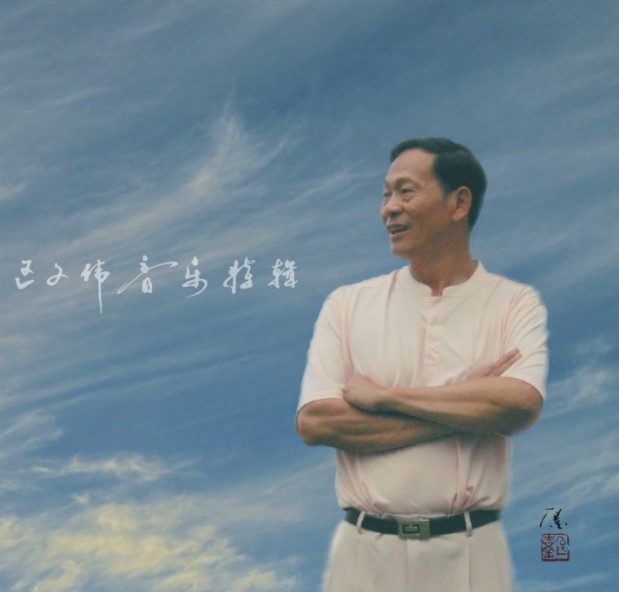

 Paul Fraser
Excerpt of Master Ou birthday lecture given on Feb. 15, 2026
Master Ou always gives a lecture to his students on his birthday sharing his wisdom on how to live a healthy, happy and meaningful life. It has been a tradition of Pangu Shengong.
Pangu Shengong advocates “kindness and benevolence.” It is a practice founded on this very principle, designed to help practitioners attain “good health and happiness, good fortune and auspiciousness.” This year, Master Ou’s birthday lecture was centered on this theme.

At the very beginning of the lecture, Master Ou explained his purpose. He said:
“I hope that as you gain more and more good health and happiness, your life and work will also become more smooth, auspicious, and fulfilling—in other words, filled with more good luck. I believe this is everyone’s wish.”
Then Master Ou asked everyone: “Is there a good method that can help people gain both good health and happiness, while also making their work and daily life go more smoothly?” And then he provided the answer to the audience. Please see below the excerpt of Master Ou birthday lecture given on Feb. 15, 2026.
[Excerpt starts:]
That method is kindness and benevolence. In order to truly master one’s life, thereby enabling oneself to live on the path of good health and happiness, auspiciousness and fulfillment, one must first understand, learn, and embody kindness and benevolence. Their relationship is simple: kindness and benevolence are the cause; good health, happiness, and auspiciousness are the effect.
I have practiced this principle since childhood, and the Pangu Shengong system I created is built precisely on this foundation of kindness and benevolence.
In all of China’s traditional cultures—whether Laozi, Confucianism, Zhuangzi, Buddhism, or the various schools of classical philosophy—there is one shared core teaching: human life operates according to cause and effect; everything in the universe follows the law of cause and effect. In everyday language, this is expressed as: “Good is rewarded with good, and evil with evil. If the retribution has not yet come, it is only because the time is not yet ripe. But once the hour strikes, all will be accounted for.” You can see that the traditional Chinese belief of karma is simple, profound, and easy to grasp. Yet to truly understand it, one must recognize that it contains rich and layered meaning. For example, we must understand what kindness truly is, and what constitutes wrongdoing or evil. We must be clear about the content of these concepts. However, many people today cannot clearly distinguish between what is good and what is bad. Especially in recent decades, as traditional culture education has been lost, people’s understanding of good and evil has become increasingly blurred.
According to traditional Chinese culture and the ancient civilizations of the world, the concept of kindness has always been clear in the minds of most people. And what is the fundamental meaning of kindness? It is respect—genuine, heartfelt respect. To sincerely respect people, and to sincerely respect all things. In the language of Pangu Shengong, the most basic form of kindness is understanding how to sincerely respect Heaven, Earth, and all beings. ‘Heaven, Earth, and all beings’ includes everything—and of course, it also includes oneself.
Sincere respect is the basic essential meaning of kindness. If a person does not even know about the first thing of sincere respect, and cannot practice it, how can he or she claim to be kind at all? Sadly, in modern society, how many people truly understand that sincere respect is the foundation of kindness?
Many people, even when dealing with their closest family relationships—between husband and wife, parents and children, brothers and sisters—do not know how to show respect. Even the way many people address one another sounds stiff, cold, and without any warmth. In fact, the way family members address each other in daily life already reveals whether there is sincere respect.
Sincere respect should be grounded in a heartfelt wish for the other person to live well and to thrive.
Many years ago, I taught my students: “If you truly respect your loved ones, then the moment you open your eyes each morning and see them, you will naturally greet them. If you see your mother, you will gently say, ‘Good morning, Mom.’ If you see your son, you will happily say, ‘Good morning, my boy.’ Or, simply say a warm, cheerful ‘Good morning!’”
When you greet your loved ones with genuine warmth and joy, that is an expression of sincere respect.
Ask yourself about it: in your own life, how many times have you offered such a heartfelt, sincere greeting to someone?
A few years ago, a student told me that after attending his lecture, she went home and put this into practice. The next morning, when she first saw her husband after he woke up, she smiled and said, ‘Good morning!’ To her surprise, he stared at her with his eyes wide open for quite a while, as if he didn’t know how to react. This continued for several days before he finally got used to it.
Think about this— isn’t it rather sad? A married couple, so close to one another, and yet when one says a simple ‘Good morning,’ the other reacts with shock and suspicion. It shows that in the past, neither of them truly understood sincere respect.
But once you understand the meaning of sincere respect, hearing someone greet you warmly in the morning will make you happy. And when you greet others with warmth and blessing, you will also feel happy. The one who greets feels joy; the one who receives the greeting feels uplifted. This is the most basic expression of kindness.
If a person lacks this kind of upbringing and often wears a stiff, expressionless face, that is an expression of ugliness—and, even worse, a leaning toward evil.
Do many people today feel that it has become more difficult for people to get along with one another? In some countries, people hardly even greet each other when they meet; instead, they look at one another with suspicion and guarded eyes. They live in a constant state of defensiveness and mutual distrust. Likewise, very few people look at the great nature with sincerity, warmth, or appreciation. For many people today, daily life has become lonely, empty, and at times, one might even say, ugly. Living with constant suspicion, resentment, and vigilance — and for some, with selfishness, narrow‑mindedness, or even harmful intentions — how can such a state of life not be called ugly? And under such conditions, isn’t it inevitable that relationships between people become difficult to handle?
When relationships between people are not handled well, they naturally give rise to inner worry and suffering. And this inner worry and suffering can disrupt the body’s normal functions and eventually lead to illness. These are simply the basic facts and basic knowledge of human life — the most fundamental cause and effect relationships in daily living—the basic karma!
Many people understand these principles, yet they do not take them seriously. Pangu Shengong helps practitioners rediscover the truths of these cause and effect, and provides concrete methods and guidance that allow them to understand this relationship between cause and effect more deeply. This empowers them to more easily cultivate a life rooted in kindness and benevolence, and walk the path of good health and happiness, good fortune and auspiciousness.
Many people’s understanding of kindness is narrow. The most common belief is that ‘as long as someone treats me well, that is kindness.’ But this view comes from innate human greed and self centered desire — it is a primitive, instinctive way of judging good and evil. In Master Ou’s view, many people born in recent decades tend to think this way, largely because they did not receive proper guidance from their parents when they were young. Imagine if, when a child first becomes aware of the world, the parents tell him: ‘In this life, people will display both kindness and evil. To speak and act with sincere respect and genuine care for others is kindness; failing to do so is ugliness. To hit, insult, or discriminate against others is evil.’ If a child grows up with this understanding, his worldview will develop normally. Then we would not see so many cold, withdrawn, distrustful, and deceitful people in society today.
Regarding the definition and standard of kindness and evil, a concise and profound explanation was given in my book The Path of Life:
‘What is the standard of kindness and evil?
To treat others with a benevolent heart;
to do one’s best to help others while also creating a good and enjoyable environment for oneself;
to never infringe upon another person’s freedom,
and to never harm another person’s vital interests —
this is kindness, this is what is good.
To do the opposite is evil — it is wrong.’
I have always been deeply grateful to his parents. Although I grew up in a poor family, my parents carried forward the essence of traditional Chinese culture. Through their words and actions, they expressed sincere respect for others. Because of this, from the moment I became aware of the world, I understood that the most fundamental aspect of kindness is to sincerely respect people. From the age of five, I began walking the true path of self cultivation.
Sincere respect is not only about greeting others in the morning; more importantly, it is about truly understanding the people who live together with you in your daily life. For example, the five-year-old me came to understand that as my parents were all in their 50s, life became more difficult, and earning money was not easy. I understood their hardships.
In other words, sincere respect requires understanding others — understanding the circumstances they face, and then, from the bottom of your heart, being truly understanding (thoughtful, considerate, compassionate) toward them. This is another virtue we ought to cultivate: a big heart of broadness and tolerance. Such a big heart must be nurtured from childhood.
A person with a big heart will take the time to understand carefully other people’s strengths and weaknesses — learning from their strengths, while letting their weaknesses serve as a warning to oneself of what not to do. One must also be thoughtful and considerate toward others, and the expression of such thoughtfulness is this: when you are in pain, do not speak of it unnecessarily to avoid burdening your loved ones with extra suffering or worry.
When you are in pain or distressed, if you know that expressing these emotions will only add to the worry and misery of your loved ones, yet you express them anyway—this cannot be considered kindness. In fact, it could even be seen as possessing a certain ugliness.
Some modern educational theories advocate that whenever a person feels unhappy, they should simply say it, vent it, cry when they want to cry, laugh when they want to laugh. From the narrow, self centered standpoint of extreme individualism, the idea of venting freely to make oneself feel better does produce certain ‘good’ results — there is indeed a momentary sense of relief in the moment of venting. But what negative consequences do this trigger?
First, when your loved ones hear your outburst, some will worry about you, while others will resent your behavior. Some may even find your actions nonsensical and decide to distance themselves from you. This creates a counterproductive effect.
Second, for yourself, although you gain a fleeting pleasure after venting, you are indulging the uglier side of your heart. You may even come to believe that venting is effective, and so you vent more and more. Eventually, you find yourself losing your temper at the slightest provocation, shouting and scolding loudly — pushing your inner character toward what is coarse and ugly. Is this not harming yourself?
Those indulgent theories, though many people take them as good methods, are actually fallacies! Many who follow these fallacies live in a distorted and abnormal state; consequently, far too many misfortunes occur in their lives.
Therefore, we must learn to face our pain and negative emotions with a broad and tolerant heart, working to gradually dissolve them within ourselves. With such thoughts and actions, your inner being will, over time, grow stronger and more upright, able to hold far more without being shaken. You will also avoid the extremes of venting and the ugliness that follows, and in the long run you will find yourself troubled far less than others. This frees you to devote more time to learning, to gaining knowledge, and to cultivating a finer character. This is the power of self cultivation.
I always treats others with a calm and gentle heart. I was already capable of this during his secondary school years; even during academic discussions, if I sensed that the other person was unwilling to listen, I would take the initiative to stop and refrain from further arguments. Many people are simply too competitive, too obsessed with being right, and too concerned with ‘saving face.’ I, however, remains indifferent to winning or losing an argument. This is a crucial part of self-cultivation.
The reason I possesses such vast knowledge is that, from childhood to adulthood, his time was not spent on aggression or conflict with others. Instead, it was devoted to quietly observing and appreciating the great nature, drawing close to it, learning from it; to interacting with people peacefully; and to reading with calmness and tolerance, allowing knowledge to enter naturally.
Another essential aspect of practicing kindness is that one must never place their own interests first. Instead, when taking action, one must first consider the impact—the benefits and harms—on others and society. Personal interests must always be secondary to the well-being of the collective. This is the sole and unwavering principle by which I conduct myself and treats others. Such a standard embodies the highest realm of kindness and benevolence.
In summary, how do we put kindness and benevolence into practice? First, we begin by applying this philosophy toward our family members and colleagues. When dealing with family members, show them greater care without considering whether we are “losing out” or worrying about our own “face”; instead, approach them with sincere respect. For elders and parents, when facing their children and grandchildren, the first task is to teach and guide them from a young age — helping them understand what kindness is, what ugliness is, what it means to share, and what selfish narrow mindedness looks like. Of course, you must first understand these principles yourself, and then put them into practice in daily life by taking pride in contributing more of yourself. If both sides are willing to give more, to be gentler and kinder to one another, then the family will naturally become warm and joyful — and your own health will improve as well.
Now let’s talk about when facing illness, what should we do?
Likewise, we must elevate our understanding of kindness and benevolence. Do not dwell on your own pain or worry about your condition. Do not keep thinking, “When will I finally get better?” or “How many more times must I practice the qigong before I am healed?”
Instead, we should say to ourselves: ‘Pangu Shengong strengthens life force and immunity by absorbing the beneficial energy of the universe through practice, thereby healing illness and enhancing health. I am fortunate to have learned Pangu Shengong and found the right method.’
In action, we must practice with firm commitment. We must also open our hearts and not worry excessively — this, too, is a noble expression of kindness and benevolence.
We should not be calculating, nor should we develop greed when we see that receiving energy from others brings good results, hoping others will send us more energy instead of relying primarily on our own practice. Such thinking and behavior reflect a low understanding of kindness and benevolence and even carry a trace of ugliness. Why not contribute more effort to practice more ourselves?
There is a very clear fact in Pangu Shengong that rewards kindness: sending energy to help others heal not only does not harm one’s own body — it actually improves one’s physical well being. So for those who are ill and wish to adjust their health, in addition to practicing diligently, they can also make an effort to help others: beginning with greater care and concern for their loved ones, doing more good deeds for them, and giving more of themselves. These are signs of an open and expansive heart, and expressions of a higher level of kindness and benevolence.
As these noble actions accumulate, the improvement of one’s physical condition accelerates.
If you are willing to send energy to others — even though it takes time, sometimes brings physical discomfort, and can be tiring — yet you do not complain, and even take pride and joy in doing so, then your mindset has risen to a higher level.
Remember: for someone who is ill, reaching this state of heart — this higher realm of kindness and benevolence — will certainly bring better results.
[End of the Excerpt.]
Over the past 36 years, many Pangu Shengong students have followed Master Ou’s guidance—practicing Pangu Shengong diligently and cultivating kindness with sincerity—and as a result, they have experienced profound improvements in their physical, mental, and spiritual health. Their real life experiences stand as vivid proof of this karmic principle: kindness and benevolence are the cause; good health, happiness, and good fortune are the effect.
